Showing posts with label lens. Show all posts

19 Feb 2023

TTArtisan 23mm F1.4 for macro

I have the manual focus TTArtisan 23mm f1.4 lens. I have extension tubes. I wondered how they would work together. It turns out that they are a pretty good combo! In this article I'll talk about my experience. I am just an enthusiast, take all I say with a grain of salt, it is just my opinion and I haven't made any scientific tests. Maybe a real world account will be helpful to you though, if so, read on...


Setup
The TTArtisan 23mm f1.4 can focus to 20cm, this isn't macro but you can get some nice close-up photos, excellent for flowers. To get even closer, I attached a 10mm extension tube and my TTArtisan 23mm f1.4 lens to my Panasonic GX9 Micro Four Thirds camera.


The TTArtisan 23mm f1.4 is a very reasonably priced manual focus lens. Click here for more on this lens. The 23mm focal length is not really the best (a longer focal length would be better) for close-up or macro but I thought this was an interesting experiment.

The 10mm extension tube I have is the Meke MK-PAF3A. But any extension tube will do. They are easy to find on Amazon, eBay, etc, for a reasonable price. 

I also have a 16mm extension tube. Using the 10mm, I had to get very close to the subject to have it in focus. For this particular 23mm lens, I found the 10mm extension tube was best. But of course you can experiment and it depends on your lens focal length which combination of extension tube will work for you. Generally, for close-up or macro work, it's better to have longer than a 23mm lens.  


Technique
When I tried to focus with the lens focus ring, it didn't really work. The solution was to set the focus to the minimum focus setting on my lens 0.2 (20cm). To focus, I moved the whole camera forwards and back until the subject was in focus. 
 
I had to get very close to the subject to get it in focus

As you can see from the above, to get the image in focus I had to be very close to it. The usual 20cm was reduced to about 10mm (measuring from the camera the sensor to the subject). This is not a good working distance but for static subjects it's fine. 

Even with the lens set to f5.6, because the lens is so close to the subject, it can be difficult to get the subject in focus. In the above picture, on the screen you'll see some blue, that is the focus-peaking, it helps a lot. Just wait until the subject edges have a little blue (or whatever colour you are using) and press the shutter button!


Look carefully at the two pictures above. Getting that critical focus on the subject is not easy. I took these photos handheld but if you use a tripod this will be easier. 


Aperture
On Youtube and the web in general, everyone goes on about aperture, how the larger it is (the lower the f number), the better. The lens I'm using starts at f1.4, that's fantastic for portrait or similar photos. For close-up or macro, a higher f number makes more sense. In the example above I used f5.6 and yet very little of the photo was in focus because I had to get so close and the subject was very small. Experiment, perhaps f8 or even higher would be better. It depends on the look you are trying to get. Here are a few example photos taken with the TTArtisan 23mm f1.4 and 10mm extension tube, at different apertures.

The first photo taken at f1.4, the second at f5.6

The first photo taken at f5.6, the second at f8

When using the 10mm extension tube I really didn't find using f1.4 made any sense. The depth of field was so thin. F4 perhaps but often I was using f5.6 or sometimes f8. It depends on the subject, the lighting, the background. The fun of photography is often in the experimentation!


Cost
Are you interested in macro photography but don't know if you want to spend several hundred on a specialised lens? This combination of the TTArtisan 23mm f1.4 and 10mm extension tube is a very cheap option. Brand new the lens is less than USD 100 and extension tubes are perhaps about USD 20. Technically it isn't true macro but you are getting close and you can get some nice shots. I've used this 23mm lens because I have it in my collection. Maybe you have a different lens, that's fine too. There are so many excellent manual focus lenses at the around 100 dollar mark. 


Alternatives
As an alternative to extension tubes, try a converter. In a previous article I wrote about the Olympus MCON-P02 Converter. Fit it to the front of the Olympus 45mm f1.8 lens and you have a great little macro solution. It has an advantage over extension tubes, with the converter you can easily remove it and put it back on. Perhaps you want a macro photo and then see something else that is far away, with an extension tube it's a pain, with the converter it is a little quicker to remove. The negative with the converter is that it fits only specific lenses and it is nearly 100 dollars. 

A more obvious solution would be to buy a true macro lens. There's the Panasonic 30mm f2.8 macro and Olympus 30mm f3.5 macro. I've not used either of those but all the reviews I've seen boil down to them being excellent choices. Both those are around the USD 300 mark so pretty good value. If you can afford it though, I would recommend the Olympus 60mm f2.8 macro. I own this lens and I love it! Here's an article I wrote on the Olympus 60mm f2.8 macro. It is around the USD 500 mark but truly excellent!

True macro lenses have some big advantages. They were designed for macro so the image quality is optimised for that kind of photography. You will get true 1:1 macro, which means the subject will appear at the same size in your image. Also, a true macro lens makes it easy to switch between near and far. What I mean is, if you are photographing a flower close up, then you see a bird in the corner of your eye, with the Olympus 60mm f2.8 macro you can quickly change and take photo of the bird. With a lens and extension tubes you'd have to take the lens and extension tubes off and put the lens back on... the bird would've gone in that time. 

There's also the Laowa 50mm f2.8 2X Ultra Macro. I've no experience of it but it's just USD 400 and it provides 2:1, meaning the image is twice the size of 1:1. Maybe an option if you need to get closer. Although you could add extension tubes to the Olympus 60mm lens to achieve this. Perhaps the ultimate solution would be the new OM Pro 90mm f3.5 macro lens. But that is around the USD 1500 mark!


Conclusion
The TTArtisan 23mm f1.4 lens on its own is good for close up photos with the native 20cm minimum focussing distance. When fitted with a 10mm extension tube the minimum focussing distance is much less and it's possible to get some excellent macro (or at least macro-like) photographs. This combination works well. 

The downside is that you have to get very close to the subject. If you want to photograph insects, I'd say this combination won't work well. With the very short focussing distance you might get some shadow of the lens in your photo, that's also not good for macro as you need all the light you can get. Perhaps a longer focal length would be better... but despite this, I enjoyed using the TTArtisan 23mm and 10mm extension tube, I found it useable and fun!


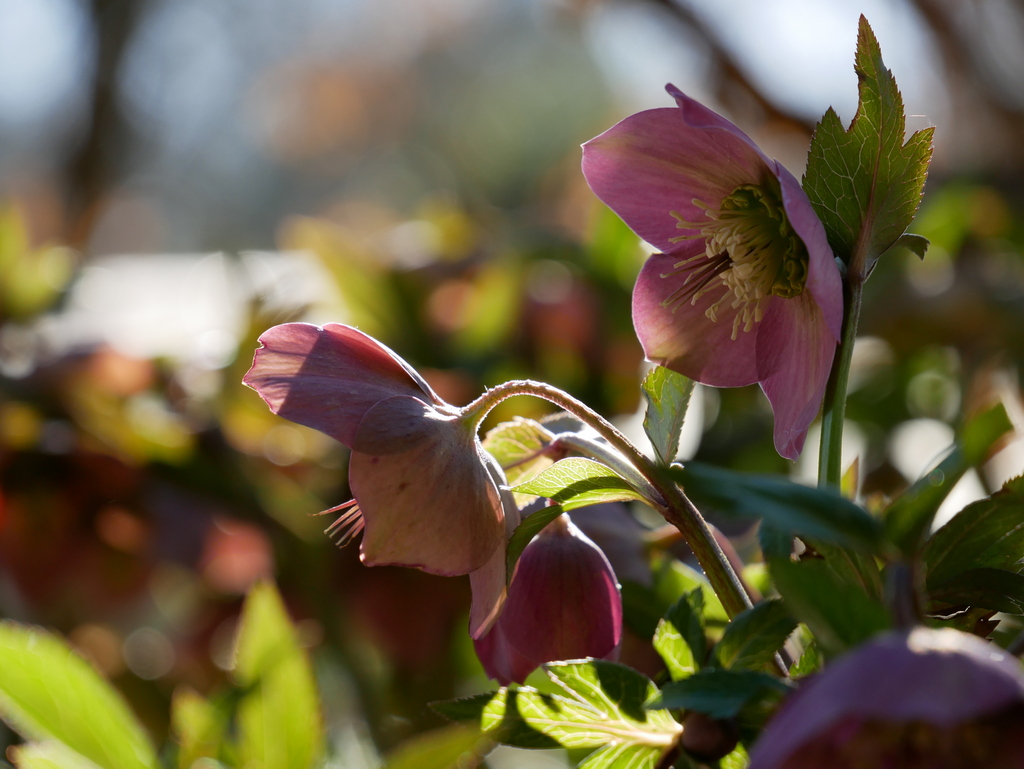
GX9 + 10mm extension tube + TTArtisan 23mm f1.4, photograph taken at f5.6, ISO 200


Disclaimer
I have not received any remuneration for this blog article. This is just my opinion, nothing more. I take no responsibility for your choice or decisions. I am just trying to help here, to share my experience, I hope you find it helpful.


23 Oct 2022

TTArtisan 23mm F1.4 lens (for Micro Four Thirds cameras)

January 2022, a new lens was released by TTArtisan. A 23mm f1.4 manual focus lens, designed for APS-C and Micro Four Thirds cameras. I bought this lens for my Panasonic Lumix GX9 Micro Four Thirds camera. In this article I will share my opinion and practical experience of the lens. I am not a pro photographer and I won't be doing any lab tests. However, I hope my real world experience will help if you are considering this lens.


Build and handling

The lens is built mostly from metal. When you hold the lens in your hand, it feels dense and it has some heft to it. To the touch it can be cold due to the metal build. The focussing ring is smooth. It is very easy to focus, you feel in control as you turn it.

TTArtisan 23mm F1.4

The aperture ring has clicks for each f stop. That's a nice feature, you can change aperture without taking your eye from the subject. I have heard in some reviews that the aperture clicks are in the wrong place, my lens doesn't have this issue, it is just right. Some complain the aperture ring is not nice to use but I also beg to differ on this too. The aperture ring is thin with teeth, your fingers can easily find it and grip it. Perhaps that isn't to some people's liking, to me it is practical.

The TTArtisan 23mm f1.4 is a very well made lens. It feels premium despite the low asking price.

One of the stand-out features of the 23mm F1.4 lens is its look. It is a good looking lens, retro with the black with silver accents. This may sound like a frivolous thing to some but it is a major reason I bought this lens. The look and feel of a lens and camera can encourage some to go out and take photos. Sometimes on YouTube I've heard professional photographers talking about lenses and cameras as "tools". For enthusiasts it can be different, perhaps we will be spurred on in our photography.

There is an optional lens hood available. I bought this, it is a screw on hood. It can be a pain to screw on. The hood is also metal, the edges are a bit sharp. It is square, this adds to the retro vibe of the 23mm lens.

I do like the look of the 23mm on my GX9. I prefer the look without the lens hood. With the lens hood on, if you sit the camera down, it will tip forward. This is because of the weight. The GX9 has some heft to it already, together with the 23mm lens, you do find yourself holding a bit of a brick. This can work to your favour, the camera can seem easier to steady. It is not a big deal but personally because of the weight, I don't think I'll ever use this as a travel lens. Of course I am used to small light lenses, if you are coming from the world of Full Frame you may laugh at me!

I have the JJC grip for the GX9. With the grip fitted the TTArtisan 23mm is a better balance. I prefer this, although the entire set up is of course still hefty.


Manual focus

This lens is manual focus only. There are no electrical contacts which means EXIF data for the aperture and focal length are not saved.

The focus ring is smooth but not loose, it won't easily slip. I like the focussing, it works very well. In the camera I have switched on focus peaking and in can also magnify the image. These features are very important, especially when using the f1.4 aperture. 


Focal length

23mm on M43 is a 'standard' focal length. The field of view is equivalent to 46mm on full frame, close to the iconic 50mm. I enjoy this focal length, it is similar to our usual field of view. It can be used for all sorts of photography.


Minimum focus distance

This is not a macro lens but the minimum focus distance is 20cm, that is excellent for close ups of flowers, for example. As a general purpose walk around lens, it does the job. It is fun to get close to the subject for that detailed photo. However, be warned that at f1.4 aperture, close up it is tricky to get focus and in any case the background blur might be too great, consider stopping down to f4 or f5.6. Remember that being closer to the subject means the background blur will be greater, even if you are at f5.6 it may look smooth. The great thing with this lens is that you have the choice.

GX9 + TTArtisan 23mm f1.4, taken at f1.4


Focus distance scale

On the barrel of the lens there are a bunch of numbers including a distance scale. It can be used for zone focussing. It's not something I use much but with a little practice it could be useful.


F1.4 aperture

One big reason to get this lens is the maximum aperture of f1.4. This means you can take photos in low light and also have some wonderfully blurry backgrounds.

In practice using f1.4 is something you should approach with care. F1.4 makes some very thin depth of field, especially if you are close to your subject. Make use of your camera's manual focussing features. Sometimes peaking only shows some edges. I recommend double checking by magnifying the image.

Above there are two photos, both taken at f1.4. The first is not a crop, I held the camera as close as I could to the subject. In the second photo I stood back with a greater distance between me and the subject. Both photos have a very dreamy out of focus area. Remember that the aperture is not the only factor in creating bokeh, the distance in front and behind of the subject also creates that subject isolation. 


Image quality

Excellent. If you want something more in-depth, there are many technical reviews on YouTube, I would recommend Rob Trek and Red35, I've added links at the end of this article.

The bokeh, or out of focus area behind the subject is smooth and I've been happy with pictures taken wide open at f1.4. There is sometimes a nice look to the photos, a sort of dreamy look. 

GX9 + TTArtisan 23mm f1.4, taken at f1.4

It works well at f5.6 too. For more depth of field and general snaps, the lens works very well. Use focus peaking, perhaps the zone focussing number on the lens barrel for a guide and you have a nice setup for street and similar photography.

GX9 + TTArtisan 23mm f1.4, taken at f5.6

The above photo is a JPEG straight from the camera, no post processing. The colours are punchy and that's not just because of the time of day I took the photo. I do feel the lens gives a slightly more contrasty picture. In any case, let's just say again, the image quality is excellent.  


Competition

The TTArtisan 23mm f1.4 has a big advantage, it's price. About 99 US dollars plus another 10 dollars for the hood. For anyone looking for a new standard focus length lens at an affordable price, this lens hits the mark. However, you should consider whether a manual focus lens is for you. I already owned the Panasonic 25mm f1.7 lens before buying the TTArtisan 23mm f1.4. I wanted the challenge of a totally manual focus lens, the f1.4 aperture and the retro look. Your priorities may be different.

If I compare the 23mm to my Panasonic, purely from a practical standpoint, the Panasonic 25mm f1.7 is the better lens. It has auto-focus, great image quality and it is light, it feels great on my GX9 camera, a better balance in the hand. The Panasonic is a little more costly, approx. 150 US dollars. Keep your eyes peeled for deals though, sometimes you can pick one up for closer to 100 dollars. If you are looking to purchase your first prime (non-zoom) I would recommend the Panasonic over the TTArtisan. Having the option of auto-focus and the light build is important. Now many might argue with me on the build, the Panasonic 25mm f1.7 is plastic. I don't mind plastic and certainly when I hold the two lenses in my hands, I prefer the light weight Panasonic. If good old metal is important to you, go for the TTArtisan.

I took some test photos to compare the bokeh between these two lenses. Below the first two photos are using the TTArtisan and the third is with the Lumix 25mm at f1.7. See what you think...

  1. TTArtisan 23mm f1.4, the photo was taken at f1.4 
  2. TTArtisan 23mm f1.4, the photo was taken at f1.7 
  3. Lumix 25mm f1.7, the photo was taken at f1.7
The first thing to note is the difference in the field of view. The Lumix 25mm (picture 3) looks bigger in the frame. But to my eyes the difference in bokeh is not a lot between the images, even f1.4 doesn't make that much of a difference. Of course it depends on circumstances, in my test photos there was a fair amount of distance behind the subject, that helps create the bokeh effect anyway. 

If you really must have a f1.4 aperture lens around the 23mm focal length, there are alternatives but they tend to be more expensive. The Panasonic Leica 25mm f1.4 for example, a wonderful lens by all accounts but about five times the cost of the TTArtisan 23mm f1.4. There's a Sigma 30mm f1.4 at around the 300 dollar mark. The OM 20mm f1.4 is also a great choice but again it is a bit pricey, even more than the Panasonic Leica 25mm f1.4. 


Conclusion

If you are used to modern photography but perhaps wish to taste how it was done in times past, the TTArtisan 23mm f1.4 is a great choice. It isn't expensive and for sure you'll enjoy looking at it and using it. It is fun to use. The images from it are excellent. Of course sometimes you miss the focus a little, especially at f1.4. But that's the fun factor, that you are in full control, in fact you have no choice, you must auto focus and the end result is up to you. 

I think it is a great lens to give as a gift. The lens comes in a very elegant box. A nice premium feel all round. That special someone might think you've spent much more than 99 dollars!

I recommend this lens. TTArtisan have done a great job, providing a low cost lens for enthusiasts. The image quality is excellent. Do you really need to spend hundreds on a new lens, if you don't need auto-focus, maybe consider this or similar lenses.


Reference

Buy from Pergear: https://www.pergear.com/products/ttartisan-23mm-f1-4

Review by Red35: https://youtu.be/FIWCZ2YHbOg

Review by Rob Trek: https://youtu.be/TEj62o0TK5U


Disclaimer

I wrote this article to help others and for my own pleasure. I have no affiliation with TTArtisan or any other photography company. These are just my own thoughts and opinion. If you disagree, that's fine. 

3 Jan 2022

Panasonic Lumix 35-100mm f4-5.6 zoom lens (for Micro Four Thirds cameras)

There are many telephoto lenses for Micro Four Thirds but one in particular is often overlooked, it is the subject of this article, Panasonic Lumix G Vario 35-100mm f4-5.6 (model H-FS35100K). 

Most of us start with a kit zoom with focal lengths 14-42mm, 12-32mm or perhaps 12-60mm. These zoom lenses cover the wide, standard and moderate telephoto focal lengths. For example, the Lumix 12-32mm f3.5-5.6, it is a tiny lens that is fine for a lot of situations, group photos, portraits, landscape, etc. 

After some time you may find yourself wishing for a lens that has a longer reach. Maybe you go to the seaside and would like to photograph a far away ship, or when you visit the zoo you'd like to capture the expression on a monkey's face? You have a few choices, you could get an all-in-one sort of lens like the Lumix 14-140mm or you could go for the lens we're discussing here, the 35-100mm f4-5.6. In full frame terms, 35-100mm is the equivalent of 70-200mm.

I'm not a professional photographer, I am an enthusiast only. I've not made any scientific tests, the following are from my real-world experience using this lens for a few years. I hope you find it helpful.  

GX80 with the 35-100 mounted // The 35-100 with the lens hood stowed in hand


Design, Build and Handling
Physically the 35-100mm f4-5.6 is a very small lens. It is smaller than the Lumix 25mm f1.7 prime lens, in diameter and length (when the lens is collapsed) - see the photo on the left below:


The 35-100 has a similar look to the 12-32mm f3.5-5.6 standard zoom (above, right photo). The 35-100 is about the same diameter and just over twice the length. Unlike the 12-32, the 35-100 has a metal lens mount and a manual focus ring. The manual focus ring is close to the front and much narrower than the zoom ring. Both rings are smooth and easy to distinguish between without looking. The lens is made of metal and plastic. The quality is very good, it feels better than the plastic of the Lumix 25mm f1.7 lens. 

The 35-100 is lightweight at 135g. You can hardly feel it when you carry it. There is no weather sealing. A lens hood is included, it is plastic, it can be put on backwards for stowing (it's not easy to use the lens with the hood on backward). The hood can be fiddly to put on. 

The 35-100 mounted on the GX80, lens hood attached, lens collapsed (left) and fully extended (right)

When the lens is collapsed (above left). In this position, if you hold the camera face down, the lens will not slip and extend on its own, it stays in place. To use the camera you must turn the zoom ring. There is some resistance, it's a firm feeling, push past it and you'll be at the 35mm position. There is a smooth, quality feel to this. The lens barrel will extend as soon as you turn it. 

The filter thread is 46mm, I really like that, many other lenses are the same, such as the Lumix 25mm f1.7, the Olympus f1.8 lenses, etc. 

I've owned the 35-100 lens for six years. I've taken it on many trips, it's rolled around inside my bag and it still works perfectly. There's just one thing I noticed recently, when zoomed to 100mm and I use auto-focus, there is an electronic sounding squeaking noise. But it doesn't affect anything and it isn't heard when videoing.  


Zoom Range and Aperture
At 35mm the maximum aperture is f4. Zoom to 100mm and the maximum aperture is f5.6. This means you should take care in low light situations. For example, when photographing at 100mm, at f5.6, if the lighting is not great then you may find it hard to keep the ISO down. The lens does have image stabilisation and is Dual-IS compatible with Lumix cameras like the GX80, GX9, G9, etc. Also, it's easy to hold the camera steady with this lens. The 35-100 is so small and light, it doesn't pull the camera forward, it is balanced well, at least on the GX80 and GX9 cameras I've used it with. 

If you are worried about the f5.6 aperture, check your own photos and see how many are taken below that. In most cases I've found that I often photograph at f4 or f5.6 anyhow. This is especially true when on holiday in good light. 

The reach of this lens is fantastic. The 100mm maximum focal length is the star of the show. I've taken photos of boats on the lake, then later on the computer I have zoomed in and then I've noticed the people on the boat! For a safari maybe a longer lens would be better but for general holiday photos, 100mm is great. The minimum focal length of 35mm is limiting though, I wish it were wider. 


Image Quality
Excellent! I haven't made any scientific tests but I'm very happy with this lens. The images have contrast, good colours, the background blur is pleasant, there is little to complain about here!

Example photos taken with the Lumix 35-100mm f4-5.6

Throughout the zoom range the quality is consistent, although I must admit I have not pixel-peeped nor made any scientific tests. 


Portraits
In addition to giving you a capable general purpose telephoto lens, the 35-100 f4-5.6 can be used as a portrait lens. Don't let the f5.6 put you off, if you put enough space behind your subject, use 100mm, at f5.6 the background blur will be very nice. But of course if you are serious about portrait photography, there are better choices.

Early 2020 I visited Zurich. Mostly I used my 12-32 but upon visiting Zurich Zoo I switched to the 35-100. The photo of a monkey is a good example of what this lens can do, I took this photo indoors, handheld:

GX80 and Lumix 35-100mm f4-5.6 -- taken at 100mm, f5.6, ISO 2000


Close-Focussing 
The minimum focussing distance is 90cm. This is ok for flowers but it's not really my favourite for this kind of photography.   

It is possible to buy some extension tubes and use with the 35-100 to get closer. I tried the Meke mk-paf3a 10mm and 16mm extension tubes:

  • At 35mm, I could get as close as 13cm (distance from the camera body to the subject)
  • At 100mm, I could get as close as 32cm (distance from the camera body to the subject)
For me, I found being at 35mm was best. However, if you are serious about macro, I wouldn't recommend this combination. Make the investment in a dedicated macro lens such as the Olympus 60mm (it's amazing - see my review here). 


Negatives
  • Close focussing is only 90mm, I wish I could get closer.
  • The lens hood is fiddly to fit. Once it is on it is fine though.
  • It starts at 35mm, this means I have to keep swapping lenses when on holiday. I wish it started at 25mm, that would've made it ideal. 35mm is just a little too tight for general photography.
  • I can't think of anything else... It would be nice if it were weather sealed but it is so small it is no trouble to shelter it from a shower.

Price
Shop around, the 35-100 f4-5.6 is often around the USD 350 mark or cheaper. Second hand, probably half that. 


Competition
All other lenses with a similar focal length are bigger, heavier or more expensive. The Panasonic 35-100mm f2.8 is a monster by comparison. Olympus have a 40-150mm f4-5.6 but it is bigger, although you do get some extra reach with it. 

I feel that the biggest competition to this lens actually comes from the 'catch-all' lenses such as the Panasonic Lumix 14-140mm f3.5-5.6. It is a reasonable price (under USD 600) and replaces the 35-100 plus your standard zoom (12-32 for example). The 14-140 is bigger but it is not huge, it could be a good compromise. Olympus/OMDS also have some nice options with the 12-200mm f4-6.3 if you really don't want to compromise on the focal lengths covered.


Conclusion
I believe the 35-100 f4-5.6 is exceptional. It is extremely small, lightweight and affordable. This lens is what Micro Four Thirds is all about! Paired with a GX80 or similar camera, perhaps a 12-32 or prime lens, you have a great travel kit. The compact size of this lens demonstrates the true nature of Micro Four Thirds, especially if you compare to the equivalent Full Frame 70-200mm lens that would be many times bigger, heavier and more expensive.

For anyone who doesn't normally take telephoto pictures, this also maybe a nice lens to have. I say this because being so small and light, you could carry this in your bag for those few times when you need the extra reach. The reasonable price is also a bonus.

Often when reading or watching reviews of lenses I hear lots said about the Pro models. But how much better are they than the consumer lenses such as this 35-100? The question to ask yourself is, do you need a Pro lens or would this smaller, lighter, more reasonably priced lens be enough? Maybe you only photograph at night, then f4-5.6 is no good. But if you take such a lens on holiday the chances are you are photographing in daylight mostly, maybe even sunshine, in which case f4-5.6 is perfect.

As an enthusiast I've had a lot of fun with this 35-100mm f4-5.6 lens. I love the quality of the photos from it. I feel it is a good choice. Perhaps one day I will go for a 14-140, as that might be a simpler option than swapping lenses and I believe it focusses a lot closer. Until that time, the 35-100 f4-5.6 will stay close at hand.


References

Review of the 35-100 by David Thorpe:

Specifications at DPReview:


Disclaimer
I wrote this article to help others and for my own pleasure. I have no affiliation with Panasonic or any other camera company. These are just my own thoughts and opinion. If you disagree, that's fine.


4 Apr 2021

Olympus 17mm f1.8 lens (for Micro Four Thirds cameras)

I've been using the Olympus 17mm f1.8 lens for a few months and wanted to share my impressions. I'm not a professional photographer and there are many technical reviews available. This article is from my subjective point of view, my thoughts and experience of the lens. The Olympus 17mm f1.8 is a Micro Four Thirds (M43) lens as used primarily by Olympus and Panasonic Lumix G cameras.


Design and Build
As soon as you pick up the Olympus 17mm f1.8 lens you smile because you are holding a quality product. You have that feeling because of the metal build. There is some plastic trim, the focus ring and cap are also made from plastic but overall, the Olympus 17mm f1.7 feels like it is built to last. Although a thoroughly modern lens in many respects, I also get a bit of a retro vibe from it. Perhaps due to the build but also the numbers and distance scale on the barrel add to the feeling. The front lens element is small which is nice because there's less to be damaged in a glancing blow. The filter thread is 46mm which is the same as some other popular M43 lenses, handy if you already have 46mm filters.
 
Panasonic Lumix GX80 and Olympus 17mm f1.8

When mounted on my Panasonic Lumix GX80, the Olympus 17mm f1.8 looks right at home. I think this lens is perfect for any small or medium sized M43 cameras. The weight is just about right, it's slightly heavier than the Lumix 25mm f1.7 for example.

Size-wise the 17mm f1.8 is also just about right. It's not as small as a pancake lens but it's smaller than comparable many lenses. Below you can see both the 17mm and the Panasonic Lumix 12-32mm f3.5-5.6 zoom next to each other. The 17mm is not a lot bigger than the tiny 12-32.

Lumix 12-32mm f3.5-5.6 and Olympus 17mm f1.8

The 12-32, when set to 17mm, has a maximum aperture of f4. If you are considering the Olympus 17mm as a compliment to the 12-32, I think it's a good choice. 


Focal Length
M43 17mm is equivalent to 34mm in Full Frame (FF) terms. That's close to the classic 35mm angle of view. Therefore the 17mm is a moderate wide angle lens suitable for all kinds of photography. I would characterise the angle of view as 'comfortable'. What I mean is, for the majority of day-to-day photography this is probably all you need. It's not very wide so there's no distortion when you get close to the lens.

It is not suited to portrait shots, although it can be good for what's called environmental portraits. That's when you include some other elements with your subject. The best example is when you are on holiday, you want to take photos with someone in it but also some background. It is a personal choice though, I must admit that I also like the 25mm (50mm equiv.) focal length too. If you are considering a 25mm lens instead, click here for an article I wrote on the Lumix 25mm f1.7. 


Close-Focussing
It says 25cm is the closest you can focus but it seems to be more like 20cm to me. This is pretty good for most situations. As the field of view is wide, it isn't easy to get close-up (macro style) photos. However, you can still get some nice flower photos as long as the flowers are big enough. In the following photo the flowers are small, because of the 17mm angle of view you can get more in the frame.

Olympus 17mm f1.8, taken at f4, ISO 200

To get those close up shots of smaller flowers you could consider buying the Olympus MCON-P02 macro adapter, it screws onto the front of the lens. I have one for use with my Olympus 45mm f1.8 lens. The MCON-P02 also works well with the 17mm:


I took the three pictures (left to right) of daisies (small flowers) above in Aperture Priority at F4, ISO 200:
  1. Olympus 17mm f1.8 lens only, as close as I could get
  2. Olympus 17mm f1.8 lens + MCON-P02 macro adapter, as close as I could get
  3. Olympus 45mm f1.8 lens + MCON-P02 macro adapter, as close as I could get
The 17mm and MCON-P02 definitely gets you closer (photo 2 is closer than 1) but is it worth the extra USD 90 (approx.) and hassle (screwing it on/off)? In my opinion, no. I think you'd be better off getting a dedicated macro lens. Where the MCON-P02 makes a big difference is when used with the Olympus 45mm f1.8 (photo 3). If you also have that lens then it might be worth getting the MCON-P02. A more detailed article on the MCON-P02 is here. 


Auto-Focussing
Fast and silent. I have no complaints using it with my Lumix GX80 camera. Way better than the Lumix 20mm f1.7, if you are comparing those two lenses, I would recommend the Olympus 17mm f1.8.


Manual Focussing
The Olympus 17mm f1.8 has a Manual Focus Clutch. The focus ring can be pulled back, this reveals a focussing distance scale and activates manual focus in the camera. On my Panasonic Lumix GX80 camera this works perfectly. Pull the focus ring back, the camera goes into MF. Push the ring forward and I'm back in AF mode.


Once the focusing ring is pulled back the distance scale is visible below an aperture scale. The idea is that in the camera you set your aperture. You match the focus ring distance scale to that aperture. For example, set your aperture to f5.6, use the focus ring to line up 1m with 5.6. That means that one metre from your camera most objects will be in focus. This is useful because you could leave your camera like this and just snap photos. You just have to remember to move within 1m. It can be good for street photography where you don't want to spend time focussing, just point and shoot.

Practically is the MF clutch useful? I haven't used it much so far, the auto-focus is so fast on my GX80. But it is a nice feature to have, something to explore.


Image Quality
Superb! I am not a pixel peeper and I don't do scientific tests. I can only say that I'm very happy with the photos when I use this lens. I wouldn't say the 17mm is a huge improvement over other lenses, such as the Lumix 12-32mm f3.5-5.6 for example, because that's an already sharp lens. However, the low-light capability of the Olympus 17mm f1.8 puts it head and shoulders above such a lens. For example, if you are outside photographing flowers and then go inside to photograph, fine, the lens does a fantastic job in both situations. If you can use a low f number, your ISO can stay lower, giving you more detailed photographs in low light. 


Background Blur / Bokeh
Yes, it's possible with this 17mm lens with f1.8, you can get some nice out-of-focus effects. But don't expect too much because 17mm is wide and to get the best bokeh effect you really need a longer focal length. If you are deciding upon your first prime and bokeh is important to you, go for a 25mm (50mm equiv.) or better still, a 45mm (90mm equiv.) lens.

Olympus 17mm f1.8, photo taken at f1.8, ISO 200

It's also worth mentioning that traditionally this 17mm (35mm equiv.) focal length is preferred by those who want depth of field, they don't want so much bokeh. Often a photograph can be best with more in focus, always keep this in mind, don't get too swept up in the notion that bokeh is always needed in your photos.


Negatives
The Olympus 17mm f1.8 is excellent, these are the only downsides I can think of:
  1. A lens hood is not included in the box. It's a shame as sometimes with direct sunlight there are some blue flares that appear. The official Olympus lens hood costs an arm and a leg! There are third-party ones, that's probably the best choice, maybe later I'll get one.

  2. There's no weather sealing but no other lenses in this price range/style, have weather sealing. Also, weather sealing is not important unless your camera body is also weather sealed. It's also a small lens so easy to shelter under your jacket if you get caught in a surprise shower.

Price
When originally released it was pricey. In recent times the 17mm has often dropped to around USD 350. I was lucky to get mine on sale, brand new, for about USD 230! Keep your eye out, you might get such a bargain. If you compare to a lens such as the Lumix 25mm f1.7 or Olympus 45mm f1.8, then yes the 17mm is expensive. However, remember that the 17mm is a lens with a much higher build quality and the manual focus clutch too. The 17mm is a premium lens for the discerning photographer! 


Competition
You could stick with a zoom lens such as the Lumix 12-32mm f3.5-5.6. It covers all the most popular focal lengths and it's small and light. However, it's not the best in low light, at 17mm the 12-32 will give you a maximum aperture of just f4. The Olympus 17mm f1.8 can open up a lot of new photography opportunities. 

For other primes I'd say the Panasonic Lumix 20mm f1.7 and Leica 15mm f1.7 are the closest competition. They are similar focal lengths to the Olympus 17mm f1.8 and are also small, compact lenses. I used to have the 20mm, it was great but the auto-focus was slow and the 20mm focal length didn't suit me. I haven't used the Leica 15mm f1.7 yet but all the reviews I've seen rave about it. I wanted this lens but I ended up with the Olympus 17mm f1.8 instead, the reason was price. The 15mm is often much more expensive.

Olympus have another 17mm, their Pro level lens, it has a maximum aperture of f1.2 and it is weather sealed. However, it's huge and heavy compared with the 17mm f1.8. Also, the Pro lens is super expensive. If you are looking for the best, of course the Pro lens is it. If you are looking for the best value, the 17mm f1.8 is the lens you are looking for.


Conclusion
The Olympus 17mm f1.8 is a fine lens that is a joy to use! The focal length is general purpose, the lens is light, compact, it has great build quality, it looks the part... it's a great little lens. 


References
Here are a few reviews and other links:

Micro Four Thirds: 

Specifications:

Review by David Thorpe: 

A comparison between the 17mm and the Olympus 14-42mm kit lens by Rob Trek: 
A comparison between the Olympus 17mm f1.8 and the Pro lens, here's a video by Peter Foresgard: 


Disclaimer
I wrote this article to help others and for my own pleasure. I have no affiliation with Olympus or any other camera company. These are just my own thoughts and opinion. If you disagree, that's fine. 

21 May 2019

Olympus 60mm F2.8 Macro Lens (for Micro Four Thirds cameras)

Once upon a time I wanted to try some macro photography. I bought the Olympus macro converter for the Olympus 45mm lens I already had. This is a great combination, I would recommend it for any beginner or anyone who'd like to get more out of their Olympus 45mm lens.

A couple of years passed and I found myself enjoying macro or close up photography more and more. Finally my wife did the kindest thing this past Christmas 2018, she gifted me the Olympus 60mm macro lens. Since then I have rarely removed it from my camera (Panasonic Lumix GX80).

In January, I started with the 60mm lens. Initially I found it a bit tricky because the weather was so gloomy and the lens itself is a little different sue to the focus limiting lever, more on this later. I have progressed as the weather has improved, now I feel like telling my story and tips for using this wonderful lens.


The lens itself
It is made of quality plastic with a metal mount. Olympus say it is splash proof, I haven't tested this but I presume it means it'll be fine with some light rain. It is a long thin design, this is ideal for macro as the lens is less likely to obscure the subject.

There is a special lever on the side of the lens, something you don't normally see. These are the lever positions:
1:1
0.19 to 0.4m
0.19 to infinity
0.4 to infinity

There is also a window with a gauge on the top showing the current setting.

Olympus 60mm F2.8 macro lens mounted on the Panasonic Lumix GX80

The purpose of the focus limit setting is to assist with auto-focus. It limits the auto-focus to a range, this makes it faster. This is important for a macro lens like this because the focusing range is unusually long. The gauge only shows the setting when you power on the camera. But of course the focus limiting lever can be changed even when the camera is powered off.

A lens cap is included but no lens hood. So far I have not had any need for one.


General photography
The 60mm is a macro lens but don't let that stop you from taking other photos with it too. It is a telephoto focal length, 60mm on Micro Four Thirds equates to 120mm in 35mm film terms. This works well for portraits. However, I have found it useful for shots of flowers, plants and other nature subjects. The field of view is tight but generally that is not an issue, just step further away from your subject.

In the botanical gardens I visit there are sometimes squirrels and having the ability to quickly change from macro to a long shot is very handy. It is the same for shots of flowers or photos with some context to them.

Tulips taken in context with the Olympus 60mm at f4

Before with my 45mm lens with macro converter, I had to pause and unscrew the converter to take a normal shot. It isn't a massive problem but it slowed me and sometimes I put my thumb on the converter lens by mistake adding a rather annoying smudge to it. The 60mm is definitely a step up from the 45mm + converter combo in convenience.

Ok, I must admit I can't get wide shots with the 60mm, it is tight, but there are always compromises.

The widest aperture is F2.8, not class leading for low light but still good enough if you don't have an alternative.

On the downside I would say the auto-focus of the 60mm is not as fast as the latest lenses. Mostly this is not an issue and certainly it isn't slow, it is just not lightning fast. The limiter lever helps but you must remember to change it. Often I forget and wonder why I can't focus!


Macro
True macro is 1:1 reproduction, this 60mm lens can do this. Having 1:1 means you can get very close, your subject will fill the frame, you will see all the details. For insects and plants it is ideal. It opens up a whole new world but it does require some patience to get good results.

Olympus 60mm macro at F8

Macro photography is tricky. The slightest movement of the camera and the focus will change and your photo will be out of focus. Also, you are so close to your subject the depth of field is so shallow that it is difficult to have very much of your subject in focus if you use the f2.8 (wide open). You must close down your aperture (increase the f-stop) but this means you need more light, on a sunny day that is ok but otherwise you may consider using flash or another light source.

Macro is a balancing trick. Pros seem to always use flash. I am not a Pro and I am not that comfortable with flash yet. My solution is to wait for the sun. With sunshine it is possible to get great macro shots. I often shoot macro at f5.6 or f8 when I can. Bright and interesting photographs are definitely possible. Be mindful of where the sun is, change your angle to get a shot without shadow from you, the lens or camera.

To help with stability you may use a tripod. In your house that is fine but when walking around outside, I am not a fan and I try to avoid tripods as much as possible as they are extra bulk to carry and fiddle about with.

My camera is the Panasonic GX80, it has 5-axis stabilisation built-in, it works very well with the 60mm lens. Most of my photos are handheld. Of course you can improve the stability by using techniques such as holding the camera against your body or stretching it out into the camera strap. Experiment and see what suits you best. In my case it varies.

For 1:1 macro I set the camera to manual focus. Don't leave it on auto because when you point it at a macro subject the auto-focus will hunt and drive you mad.

I suggest Aperture Priority mode. I found this best as often I want to change the f-stop. I have my ISO limit set so I don't worry about it.

Once you set your camera to A and manual focus, it is best to save your settings to a custom position. This is useful, you can quickly switch between macro and standard photography by turning your mode dial. Here's a good video on using the Custom Mode:

Once you have that set up set the lens lever forward to 1:1. Do not use the manual focus collar. Instead change focus by moving the camera in and out, closer or further from your subject. Parts of the image will come into focus. If you have focus peaking on it will help you know when to press the shutter. Sometimes pressing the shutter makes enough of a movement to blur your shot. If that happens to you, try the camera's silent mode, that's the electronic shutter and makes taking a shot very gentile. 

Set to 1:1, move the camera in and out until you get focus

I've also used the 4K Photo mode of my GX80. This is on all recent Panasonic cameras and it helps you capture the moment. With insects I've found it especially helpful. For example, use 4K S/S, position yourself, move in and out to get focus on a flower you've seen a bee on, when you see the bee in shot press the shutter button. Move in and out to try to get focus on the bee while it buzzes around. Hopefully you'll capture at least one or two moments. When you review the 4K Photo mini-video, you can extract the frames where the bee was in focus. It has focus peaking so it's easy to do.

Olympus 60mm macro at F5.6

The competition
The Olympus 60m macro is not a cheap lens but thankfully some shops have deals on this lens because it has been available for a few years now. There are cheaper alternatives to the 60mm. There are Olympus and Panasonic 30mm macro lenses available. I find the Panasonic 30mm especially attractive as it is often very reasonable and it has in dual image stabilisation, so it works in unison with the GX80 and similar cameras. I haven't used these 30mm lenses myself but I have see positive reviews of both. One thing to keep in mind with 30mm and macro is that you must get closer to your subject than if you were using the 60mm lens. If you are photographing insects this could be an important reason to spend the extra and get Olympus 60mm. Also, I have found the extra reach of the 60mm has been helpful to avoid shadows falling on the subject, from myself or elsewhere. The upside of the 30mm macro is that it is smaller and 30mm will be a much more versatile focal length if it is the only lens with you. It might be a more practical option especially as the 30mm price is often low (USD 300 approx.).

There is also the Panasonic 45mm macro lens. I have no first hand experience but from the reviews I have seen the Olympus 60mm is a better choice and it is cheaper.

Here is a video comparing all four of these macro lenses.
https://youtu.be/LSb9oSeEGII


Olympus macro converter
If you already own the Olympus 45mm f1.8 lens, I think the Olympus macro converter is worth a look. I have used it extensively. It is not a true 1:1 macro but it does get you very close, for flower shots it is perfect even with auto-focus. The macro converter costs around USD 100, if you already have the 45mm lens then this might be a good option for you. The following is an article I wrote specifically on the macro converter.


Extension tubes
This is the cheapest option for macro photography. I have the Meike extension tubes and they work ok. I say "ok" because it is always more work to get a good photo with extension tubes. But it is fun to play around with tubes and all the lenses you have. I have a Panasonic 35-100mm f4-5.6. with the extension tubes it works as a pretty good macro. But like I say, it takes longer, you must experiment to get a good shot.


Conclusion
I believe the Olympus 60mm is the best macro option for Micro Four Thirds. I enjoy using it because the results are excellent. This is the best way to get really close and even enter another world. It isn't cheap but on the other hand it is not super expensive either. It is well positioned for what it is. Do remember that it is a specialist lens so consider how much you like macro, maybe one of the 30mm alternatives would suit you better. However, from my experience in can assure you that you will not regret buying the Olympus 60mm macro lens.

If you'd like to see some more photos please visit my Instagram page here:
https://www.instagram.com/mgversion1/


Disclaimer
I have not received any remuneration for this blog article. This is just my opinion, nothing more. I take no responsibility for your choice or decisions. I am just trying to help here, that is all.


13 Apr 2018

Three months with the Panasonic Lumix G 25mm F1.7 ASPH lens

There are so many reviews of the Panasonic 25mm F1.7 lens. Why another one? Well I'd like my say because I am impressed by this lens! Also, I am just an enthusiast so maybe my view can be complimentary to what you've read elsewhere.


My Story
A few years ago I was using the Panasonic 20mm F1.7 pancake lens. I used it with the Olympus PEN and Panasonic GX7. It made my camera almost pocket sized. I liked the 20mm (40mm equiv.) focal length. But I grew restless and when I was shooting in daylight I tended to go for zoom lenses, especially when on holiday. I didn't use my 20mm much and when I moved to a new GX80 camera, I sold my 20mm along with my GX7. I was happily living with my 12-32mm kit lens for general purpose photography, it is really excellent.


My Surprise
This past Christmas I was given the Panasonic 25mm F1.7 lens. At first I thought I'd only use it for low light shots. To my surprise for the past three months the 25mm has stayed almost exclusively attached to my camera. Maybe it is just a honeymoon period but I do really enjoy using this lens. The 25mm focal length feels more versatile than the 20mm did. The focus speed is superb. The 25mm is bigger than the 20mm and many of my other lenses, I thought before that this would be a negative, somehow it isn't. I find the 25mm sits well on the front of my GX80, the camera is so well balanced with it. Maybe this is due to the 25mm being lightweight?


Build Quality
As I mentioned above, the 25mm is a lightweight lens. It looks high quality, at least to my eyes. In your hands it feels like plastic but despite this it is definitely a solid lens. The mount is metal, the focus ring is very smooth, I don't have any complaints. One upside of the plastic is that when it is very cold weather the lens barrel doesn't bite your fingers off like metal does!

If I were to be picky, I would say the supplied plastic hood can be a fiddle to attach. But I shouldn't complain because at least the lens hood is included in the box. It's a big hood too so it is practical. 


Focal Length
25mm in Micro Four Thirds is equivalent to 50mm in full frame. This is a classic focal length and I really do appreciate it because you can get a wide range of shots with it. Portraits with background blur are easy (the focal length plus the F1.7 aperture help!), full body shots are fine (you don't have to walk too far backward), landscape shots look great, there's no distortion as you get on some wide angle lenses. There are so many good things to say about this focal length. In some ways you can replace your kit lens with this. I know, a 14-42 or 12-32mm lens is really great and don't get me wrong, my 12-32mm still has it's place in my bag/pocket. I just mean that if you only take this 25mm lens out with you, it's ok, you can manage. Most shots can be had by zooming with your feet. 


Close-up
The minimum focusing distance is just 25cm. That means more of the subject can fill the frame. I've found the lens really good for photographing flowers and even insects. For insects of course they are very small so you will probably have to crop the photo to see any detail on them. The good news is that this lens is sharp so when you crop the detail is there. I've even done this with 4K photo mode, you still get insects shots that you can use on social media.

Original 4K Photo
Crop of the bee, there is still a lot of detail


Low Light 
The typical kit zoom lens such as the 12-32mm starts at just F3.5. This isn't bad, in fact I've taken plenty of great photos in the evening or at night with this lens and the 14-42 PZ for that matter. It's just that you have that added amount of freedom with the 25mm F1.7. It lets lots of light in and therefore the ISO can be lower giving cleaner images. 

The 25mm does not have any image stabilisation. However, because of the F1.7 aperture and if you are using a camera with in-body image stabilisation you should be fine. For example, I have a Panasonic GX80 which has in-body image stabilisation and it works very well with this lens.


Kit Lens Compliment
If you've just bought a camera and it came with a 12-32mm or similar kit zoom lens, if you are looking for a step-up, the 25mm is the best choice. You can use it to experiment with low light and portrait shots with blurred backgrounds. It's a light lens so you can carry both the 25mm and your little kit zoom with you. If you do with to improve your photography skills, using a fixed focal length lens, a 'prime' lens such as the 25mm, will help you a lot. I have learnt so much from prime lenses, they force you to frame the shot by moving closer or further away rather than being lazy and turning the zoom ring. You end up learning to 'see' focal lengths. Really, after a while you know what 25mm looks like so when you point you camera, you can frame the subject much quicker. Practice helps but believe me, if you want to improve this is the way to go. 


Conclusion
The Panasonic 25mm F1.7 is a great lens. I know many reviewers out there have said other more expensive lenses are better. Maybe at the low asking price of this lens, you can't go wrong. The photos are so sharp and vibrant, perhaps only but pros with the keenest of eyes would notice the difference in image quality between this and a more expensive lens. For those of us who are enthusiasts and with mortgages to pay, this Panasonic 25mm F1.7 makes a lot of sense. 


Besides the sharpness and the price, I feel this is an extremely versatile lens. It is great for portraits, headshots, landscapes, close-up (almost macro), indoor and low light photography. If you can't decide which lens to use, this is the one!


Reference
DPReview of the Panasonic 25mm F1.7


More articles about photography:
https://mgxp.blogspot.ch/search/label/photography

4 Mar 2017

Panasonic 14-42 PZ compact zoom lens, the perfect all-rounder

I'm the proud owner of the Panasonic GX7 micro four thirds camera. I have a small collection of lenses. A couple of years ago I just had just two prime (non-zoom) lenses. It was a great way to learn because using a prime fixed focal length helped me with composition. You start to 'see' the picture before taking it. However, I found that frequently changing lenses when I was on holiday was a bit of a pain. Sometimes I'd be using my Oly 45mm and I would miss a wider shot because I was too lazy to switch to my 20mm or I just didn't have the time to get the shot.

One day I noticed a Panasonic 14-42mm PZ zoom was on sale in a local camera shop. It was second hand but in good condition, the price was attractive, I decided this could be a good move. I have not been disappointed.

Here's the full name of this lens:
Panasonic Lumix G X Vario PZ 14-42mm F3.5-5.6 ASPH Power OIS
Catchy isn't it!?! ;-)  I'll just refer to it as the 14-42mm PZ in this article.
  
GX7 with the Panasonic 14-42 PZ, retracted (camera OFF)

Here with the lens extended (camera ON)


Compact
The Panasonic 14-42mm PZ lens is compact, just a little larger than the Panasonic 20mm pancake lens. You can buy a lens cap for this lens that will open automatically when you switch on the camera. In the photos here you can see I have this mounted. It does make the lens slightly bigger but it's worth it for the convenience. I think for a travel/holiday lens having no cap to lose is a real boon. The lens cap is called JJC and you can find it on eBay or Amazon.

JJC automatic lens cap, open

Focal Length
The 14-42mm is a good zoom range, 14mm is wide enough, 42mm is fine for a close-up or a portrait.


Aperture
The only down side of this lens is that the aperture, it starts at F3.5 at the wide end to F5.6 at 42mm. For the most part, when on a holiday trip I haven't found it a problem. Usually I am shooting in daylight anyway, so having a smaller aperture (higher F-stop) is better. Also, for taking photos of a group of people, it's easier to get all their faces and the background view in focus with a smaller aperture (higher F number). In the evening sometimes I wish I had my 20mm F1.7 to deal with the low light but having said that, the 14-42mm really does a great job at F3.5, at the wide end, for most situations it is enough.


Zoom
The Panasonic 14-42mm PZ... why the "PZ"? There's no manual zoom ring to turn on this lens. Instead there is a rocker lever. It's an electronic zoom, the PZ stands for Power Zoom. I have found it to be smooth and of course this is a good choice if you are into video. The focal length is displayed on the camera screen. The zoom is fast enough, at least for me. When I switch on my camera there is only a small delay. If I was using a manual zoom then in any case I'd have to extend the lens myself, in the case of the 14-42mm PZ, it extends on its own of course. Having no manual zoom nor focusing ring means the size of the lens is small.


Image Quality
From what I've said so far it sounds like there are a few trade-offs or compromises with the 14-42mm PZ. Well there are of course, most notably the low-light capability. However, I can live with these trade-offs and I really do recommend this lens because of the most important thing about any lens - the quality of the photos! This lens is great, I can't complain about the quality at all. For most holiday style pictures it's more than enough. In daylight shooting it's sharp and you can even get some bokeh (background blur) in your shots.
 
Panasonic 14-42mm PZ, taken at 42mm, F5.6, ISO 320


The lens can focus closely, to 20 cm. That's not macro exactly but it is good enough for taking flowers. The lens has stabilisation which helps you take better shots in low light. It works well and works for video also, which is the best choice for a camera like the GX7 where there's no in-built image stabilisation for video, using this lens with it makes a difference. The auto-focus speed of this lens is also excellent, faster than the Panasonic 20mm.


Conclusion
If you are looking for a compact all-purpose zoom which will not break the bank, this is a good option. As it isn't a new lens model it means if you look carefully you should be able to find this lens at a bargain price. Because of this and how useful it can be to have a fuss-free lens like this when on holiday, I think it's a very good choice. For myself, I originally got this lens as a stop-gap but I'm still using it two years on.


References

A video review by David Thorpe:
https://youtu.be/vwokKQ70MJ0

For more information and the full specification of the 14-42mm PZ take a look at DPReview:
https://www.dpreview.com/reviews/panasonic-x-14-42-3p5-5p6

JJC auto-lens cap:
https://www.amazon.co.uk/d/Camera-Lens-Accessories/JJC-Automatic-Panasonic-F3-5-5-6-H-PS14042/B00IFWE9M0/ref=sr_1_1?ie=UTF8&qid=1488633396&sr=8-1&keywords=panasonic+14-42+pz+lens+cap